We had a lovely breakfast Tuesday morning with the English couple and two American women who apparently lived in Ireland. We talked quite a bit about the differences between American and English cultures, and tried to figure out why Americans think the English are so stuck up. All the Americans in the room agreed that we are embarrassed to come from a country that would elect an idiot like Bush and afraid of what he's going to do to the world, and the British people in the room agreed that we should be. We said fond farewells--with a hostess as friendly and gracious as Eileen, we will definitely stay here again next time we are in the area.
Our plan for the day was to drive to the Dingle Peninsula. About a half hour along our way was a small town called Cashel. On the edge of the town, perched on a walled hill overlooking the town, is a pile of monastic ruins known as the Rock of Cashel, so we stopped to take a look. We took the back trail up to the rock, from which we had a lovely view of another nearby monastery.
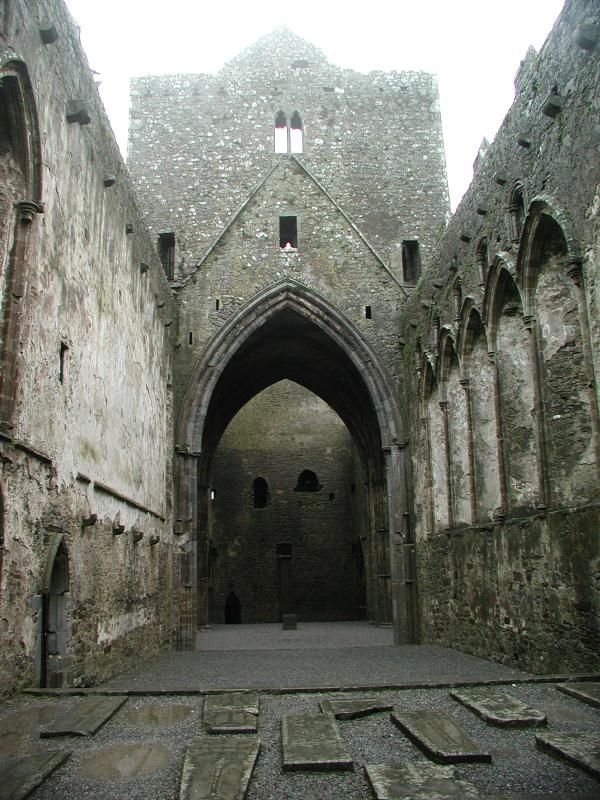
The first building we explored was St. Patrick's Church, a large Romanesque building. We admired the ribbed vaults, the gargoyles, and the nifty walkways inside the upper stories of the walls. They're doing a lot of restoration work on this part of the site, so we couldn't wander it quite as much.From there, we wandered around the graveyard. Most of the graves are relatively modern, but we had a marvelous view of the surrounding countryside just as a thick mist was beginning to settle on it. This monastery also has a round tower, much like the one at St. Kevin's.
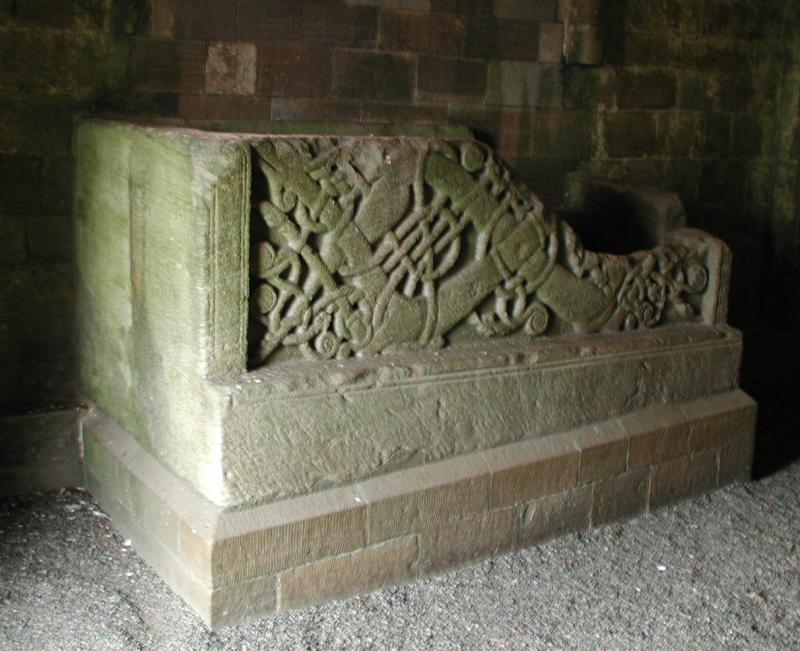
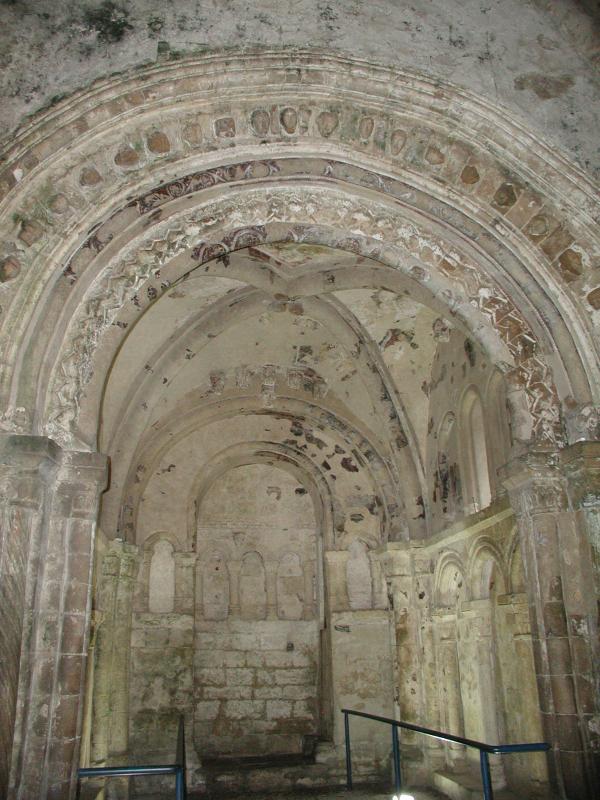
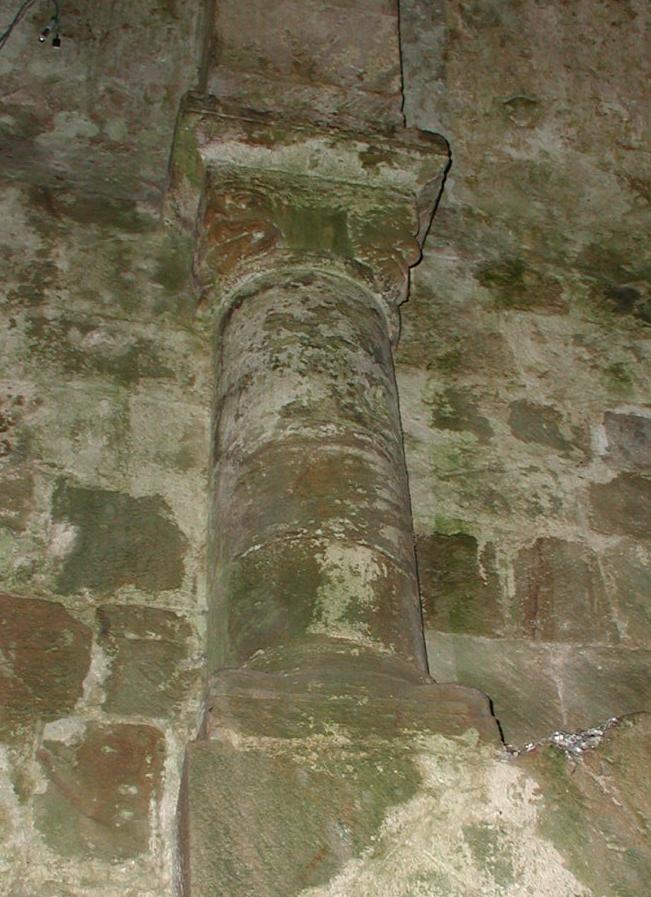
Attached to St. Patrick's Church at a funny angle is the 12th century Cormac's Chapel. It's a small building, but it's really nifty. The masonry is beautiful, and there are lots of carved decorations around the doorway, which have unfortunately deteriorated. Inside really felt like holy space. At the very back were the remnants of an elaborately carved sarcophagus. Along the sides of the sanctuary are columns with faces carved into their capitals. An arch separates the nave from the chancel--this arch has many round stones set into it with faces carved into them, many of which have deteriorated to have an almost African primitive look.
The ceiling above the altar had been painted at one time. Little bits of paint still remain--just enough to give a tantalizing hint of the chapel's previous glory.
We didn't spend long at the Rock of Cashel, but we enjoyed it. We set off into the mist and continued our drive to Dingle. We were taking back roads to get there (as if there were any other roads in Ireland), and the roads weren't quite doing what the map said they should be doing, so we weren't sure where we were. We passed an elderly couple walking down the road, so we stopped to ask them where we were. They were very kind and gave us very detailed directions, which they then went over many many times to make sure we understood. The problem with asking for directions in Ireland is that the roads don't really have names. The names of the roads aren't marked anywhere. Maps give them names like "R515," but locals just know the roads by what towns they lead to--"The Tralee Road" or "The Listowel Road." So getting directions can be tricky. But these people were very helpful. Once they were certain we knew where we were going, they wanted to know all about our trip and where we had been and where we were from, and we ended up in a big conversation about how much Bush is screwing things up and how messed up the world is. All the time we were talking, we were sitting on this narrow road, and every time a car passed by, the couple had to squish against our car to make room for the other car. They were darling little people, and it fun talking to them.
 It's kindof hard to see in the picture, but the gargoyle on the left is
sticking his tongue out.
It's kindof hard to see in the picture, but the gargoyle on the left is
sticking his tongue out.
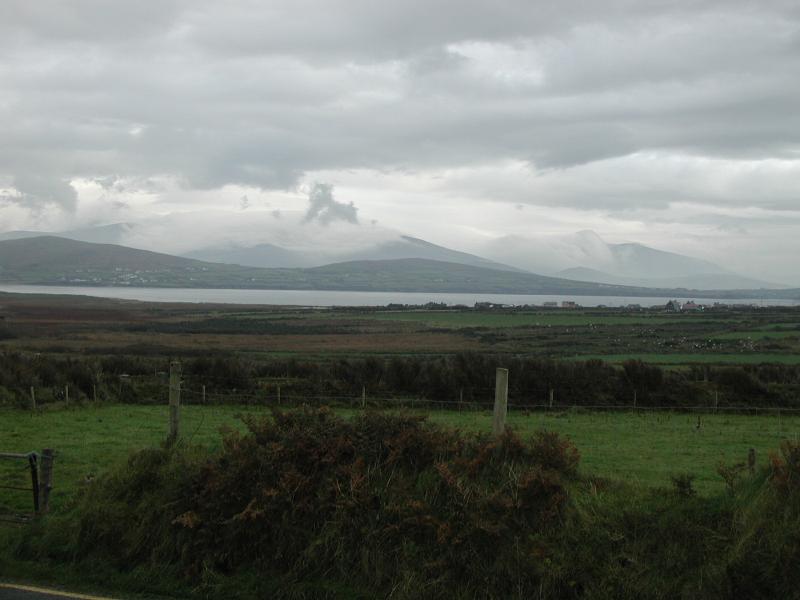
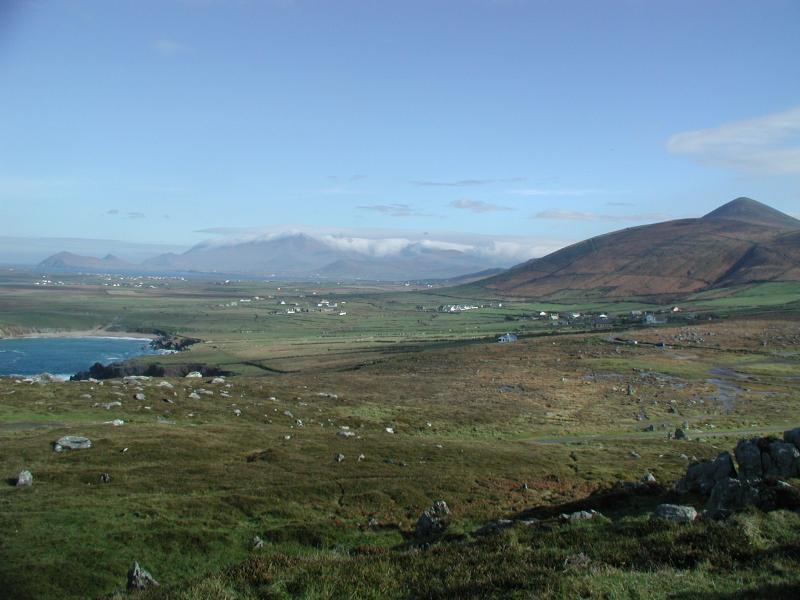
After that, the drive went faster than we thought it would, and we soon arrived on the Dingle Peninsula. The moment we went onto the peninsula, the scenery in all directions became breathtakingly gorgeous. To our right, we could see the quilted patchwork of the Slieve Mish Mountains, with a thick cap of rolling mist on top and lots of puffy white sheep everywhere. To our left was the coast, with beaches, cliffs, turbulent waters, and a distant view of rolling hills on the other side of the water. Sometimes the road was right on the edge of the cliffs.
Soon, we arrived in the little town of Dingle. Our first goal was to find a place to stay, which quickly became very frustrating. After finding a few places with no vacancies and cursing at a phone card that wasn't working, I finally managed to get in touch with someone, and asked her if she had a room for two available. "Where are you parked?" she asked. I told her, and she said, "I'll be right down." Feeling very relieved, we stood next to a statue of Fungi, Dingle's dolphin celebrity (he moved into Dingle harbor in 1983 and has been playing with tourists ever since then), and waited. Soon a young lady on a bike rode up and introduced herself as Veronica. She was very friendly and silly. So we got in the car, and she led us to her B&B. She showed us to her room, then sat us next to the fire in her dining room for coffee (she had just run out of tea, which is too bad, because for all their skill with tea, the Irish really don't know how to make coffee). We were introduced to her husband Tom and toddler daughter Rachel. Veronica and Tom speak Gaelic, and they kept slipping back and forth between languages. Most of the Dingle Peninsula is the Gaeltacht--an area where Gaelic is the only official language. Many of the signs here are only in Gaelic. Rachel is a cute and cheerful child, but very noisy, so our conversation was constantly interrupted, but Veronica told us a lot about Dingle, how quickly the town is growing, some local sites we should be sure to see, and about some of the musicians in town. Dingle is full of artists and musicians--apparently they don't have to pay taxes.
We finally set out onto the streets of Dingle. It was after 5:00, but a lot of the shops were still open, so we poked around the shops for a while. When we got hungry, we had tomato soup and chips at a pub. Then we went to a pub called the Small Bridge because they have live traditional Irish music every night. We got there long before the music started, and settled in for the evening next to the peat fireplace. We ended up being mostly surrounded by Americans--there was a middle-aged couple from Wisconsin and a group of American girls, one of whom has close enough relatives in Ireland to be eligible for dual citizenship. We talked to all of them about our journeys so far, commiserating about the hazards of Irish driving.
Before long, the musicians arrived. We had the best seats in the house--right next to the cozy fireplace and about 10 feet away from the band, which consisted of an accordion, a banjo, and a guitar. A bodrhan player showed up later. The music was wonderful, the Guinness and Bailey's were tasty, and the company was great--we talked to lots of really nice people, Irish and otherwise. The pub has a nifty old-fashioned dark Irish pub feel to it. The American girls were really good at Irish dancing (a la Riverdance), and the musicans had fun playing good dancing music for them. At one point, the accordion player asked the girl who had danced the most where she was from, and everyone laughed when she said, "New York--sorry!"
Thouroughly happy after a magically wonderful night, we found our way home and went to bed.