Our second day was spent exploring the Burren, the northwestern part of county Clare. Our first stop was the Dromore Wood. We had read about this forest in the list of sites administered by Heritage Ireland (we bought Heritage Cards, which gave us free admission to all Heritage Ireland sites--that paid for itself really fast! The forest was free anyway though). We started out on the N18, which is the closest the Irish have to an interstate--it's a two lane road, with an extra-wide shoulder for slow vehicles. As we drove, the roads got narrower and narrower, ever more twisty, and walled in by hedgerows and stone walls. By the time we got to the forest, the road wasn't wide enough for two small cards to fit side-by-side.
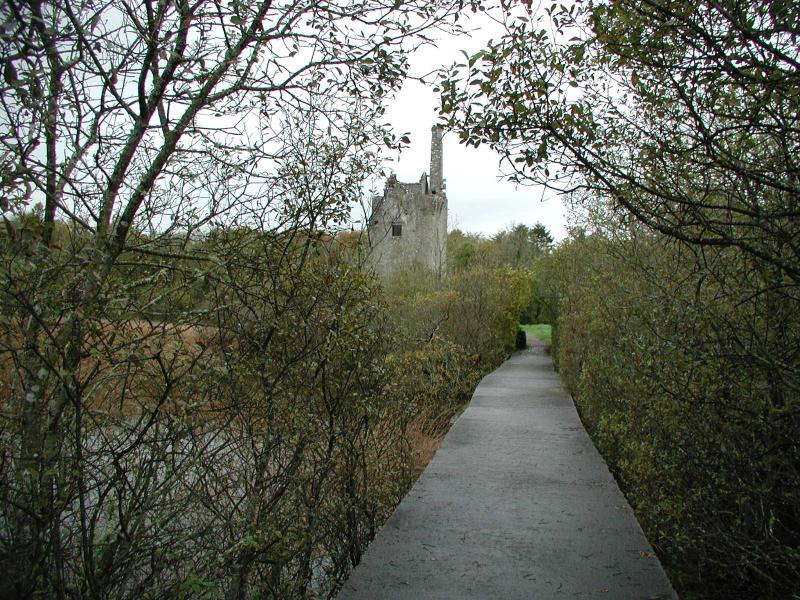
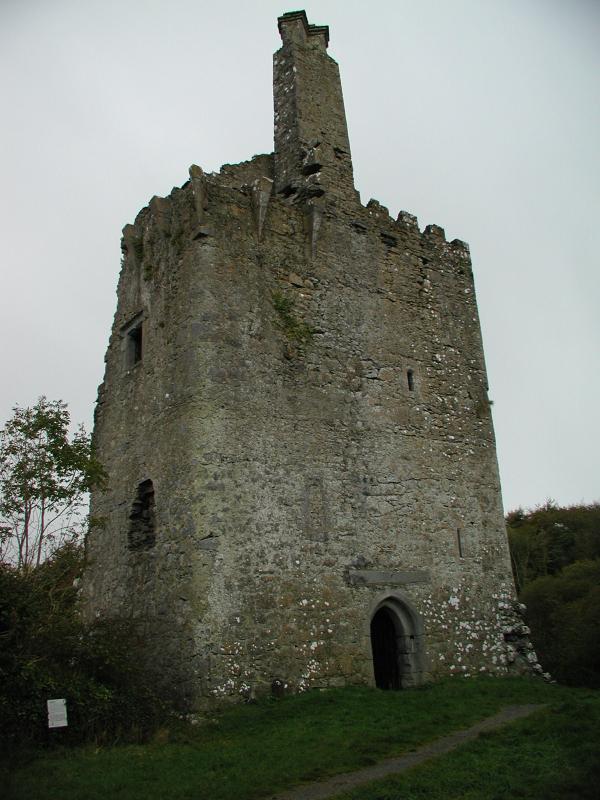
We followed a trail marked "Castle Trail" into the forest. The path went along a concrete wall over a swamp/lake. On the other side of the lake was a ruin of a very small tower keep. Unfortunately, the entrances were blocked, so we couldn't go in.
The castle trail is a lovely circular path that wandered through a lovely forest with lots of moss, ferns, and ivy. We bumped into a lady walking her dog on the trail (the dog followed us for a large portion of the walk) who explained to us that Heritage Ireland is working to make this an Irish forest, consisting only of native flora. Every time a pine or non-native tree dies, they plant a beech or an ash in its place.
After our hike, we hopped in the car and headed for the Cliffs of Moher. Jonathan zoomed skillfully along the narrow roads, narrowly avoiding knocking off the side mirrors. Plants from the hedgerows were reaching out to smack my window the whole trip.
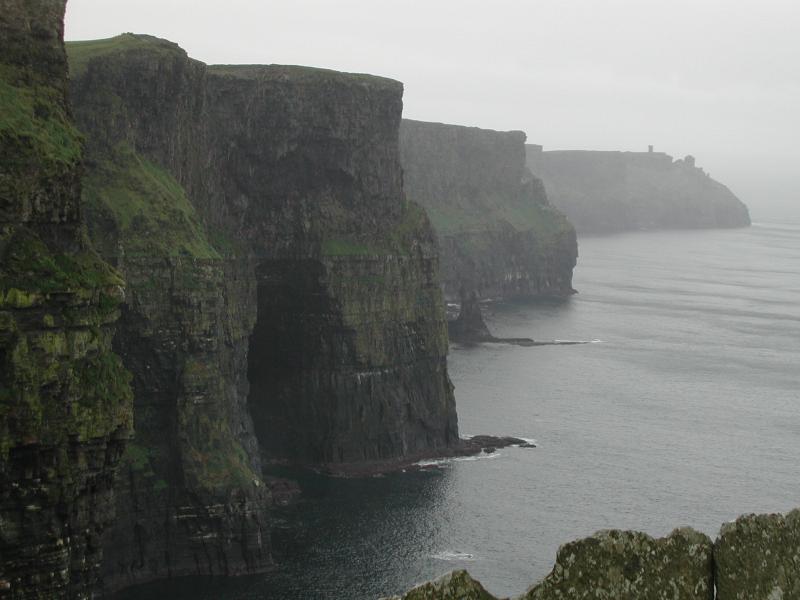
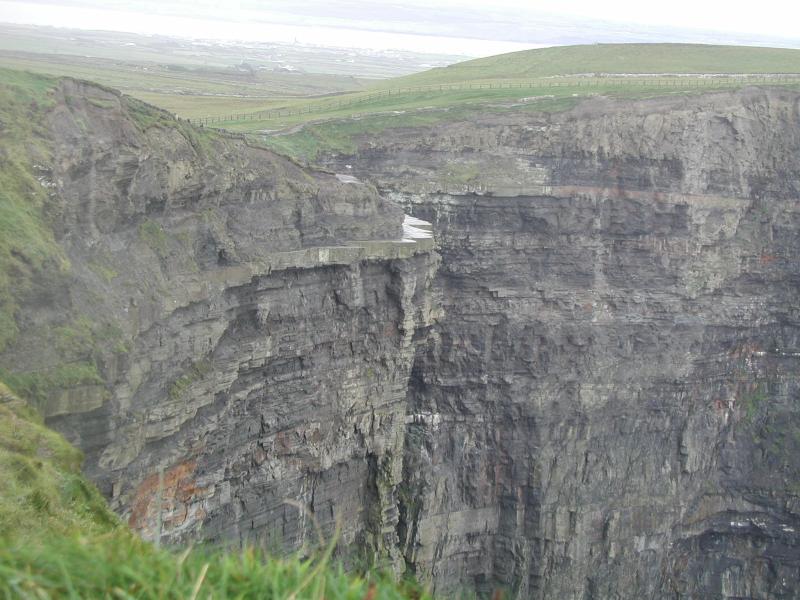
The Cliffs were definitely an adventure. All you can really do there is park your car, go look at the cliffs, and go back to your car (with a stop at a souvenir shop, of course). The view was beautiful. If you stood near the bottom of the path, the wind against the cliffs made a really interesting moaning sound. A stone-paved path led up a hill to O'Brian's Tower, but the tower was closed for the season. The wind up there was ridiculous--the kind you can lean all your weight against and not fall down. They have a stone wall along the edge of the cliff to keep people from getting blown off (and we were glad it was there!). You used to be able to take a path along the top of the cliffs, but it is blocked off now because it is so dangerous. We didn't stay long, but it was an astounding view.
Our next stop was a little town called Killeforna, which has a Visitor's Centre for the Burren area. The town also has a bunch of High Crosses (the nifty kind with Celtic knots carved all over them). We went to the ruined church next door to explore the crosses--unfortunately, the church is under construction, so there were a few we couldn't see. The ones we did see were a little disappointing because they were so weather-worn that you couldn't really tell what had been carved on them.
So we went to one of the pubs in town and had some really good potato-leek soup, tried to drive out of town and went the wrong way and had to drive back, and then made our way to the Poulnabrone Dolmen.
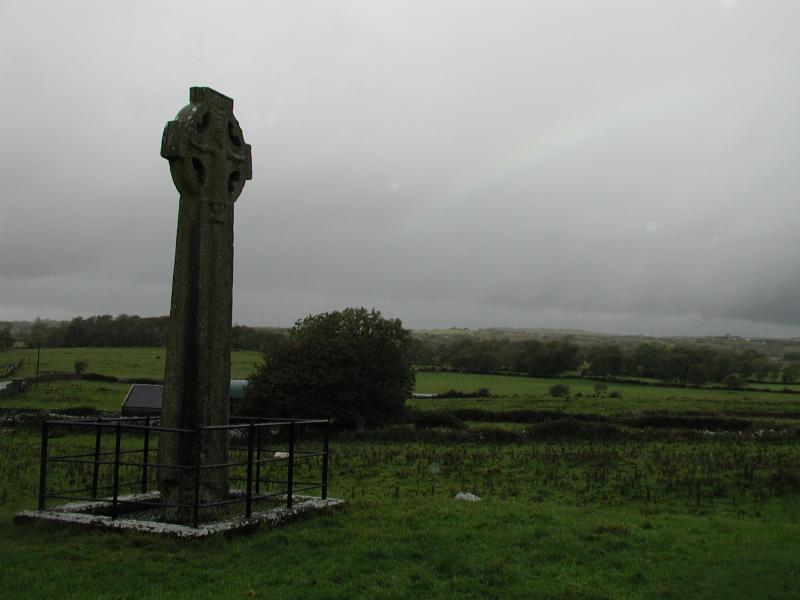 It's a bit hard to see in the picture, but as we looked at this cross,
a rainbow appeared over it.
It's a bit hard to see in the picture, but as we looked at this cross,
a rainbow appeared over it.
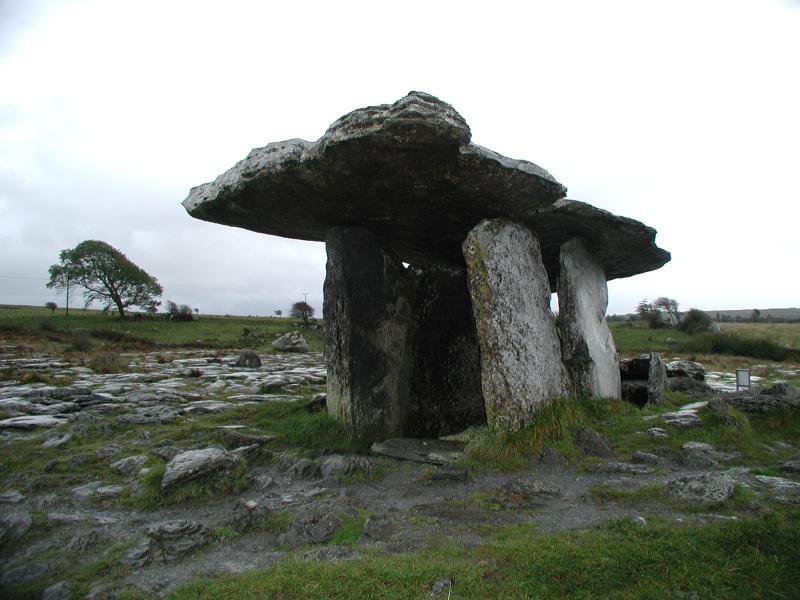
Poulnabrone Dolmen is a famous prehistoric burial site. We had to park the car by the side of the road and walk across a very rocky field to get to the Dolmen. The Burren is a ludicrously rocky area--they can't really grow anything here because there are so many rocks, and you almost feel like the stone fences are just natural rock formations, there are so many rocks everywhere. Since there were a bunch of people around the Dolmen, we had a good time hopping around on the rocks until they left and we could have some time alone with it. It is amazing that this has managed to stand all these centuries--the huge rock on top looks like it is about to slide off, but it's stayed up there for ages. The Dolmen used to be on private property, but Heritage Ireland has just bought it--we actually talked to some guys who work for Heritage Ireland there, and they said they are planning to build a Visitors' Centre there, so that there will be more information available about the Dolmen--right now, there are no signs or anything about it.
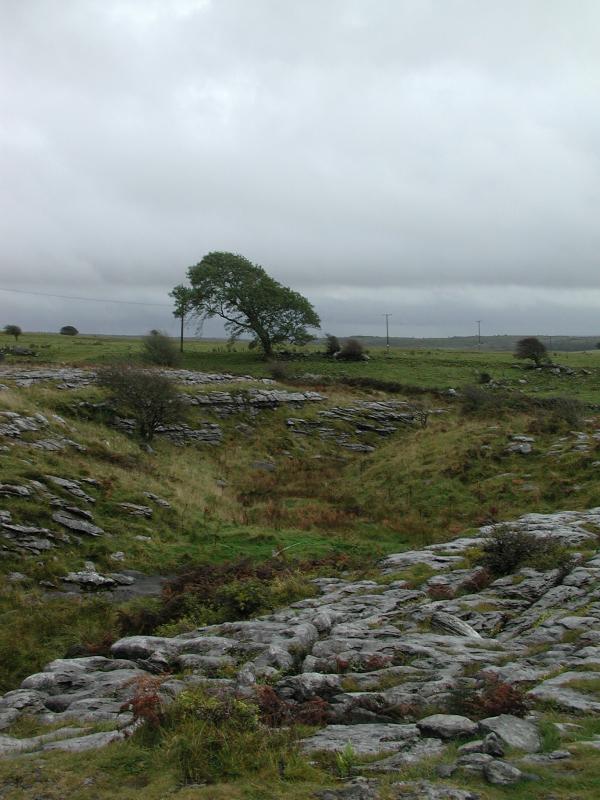 This is the rocky field next to the Dolmen.
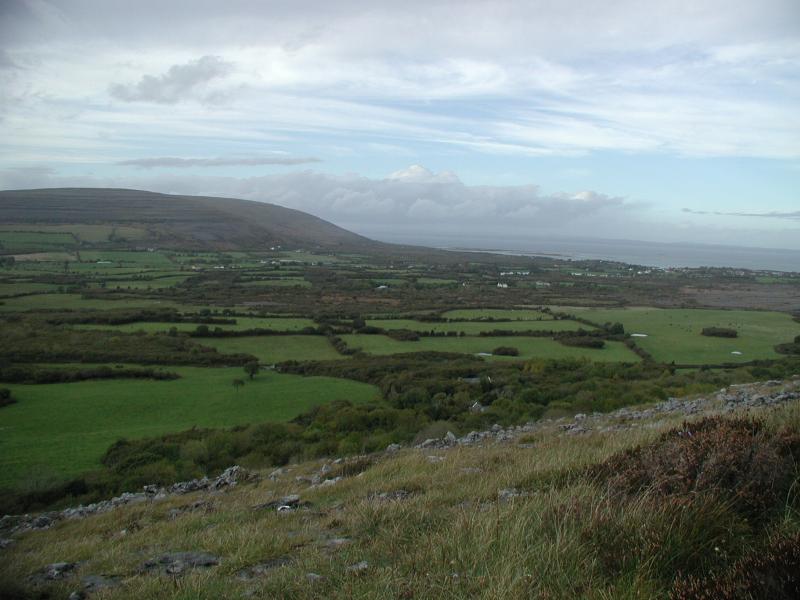
Our route through the Burren took us past the Aillwe Caves, so we stopped there for a tour. It's a bit touristy, but it was interesting. We had to wait a while before the tour began, so we climbed up the rocky Aillwe Mountain, where there were some lovely views of the countryside. The cave had a paved walkway and lots of electric lights. There is no evidence that humans had ever been in this cave before some guy found it in 1940. The cave was formed at the end of the last Ice Age, and the river that went through it dried up around 8,000 years ago, so it's pretty young as far as caves go--none of the stalagmites and stalagtites were bigger than about 2 feet in length, and most of them were much smaller. There were bones of a black bear and two little bear nests in the cave--bears have been extinct in Ireland for a really long time, and it's really rare to find one of their sleeping holes.
After the tour of the cave, we drove to the nearby town of Ballyvaughn to find dinner, and ate at a lovely place called the Monk's Pub. We found a B&B not long thereafter, and settled in for the night.